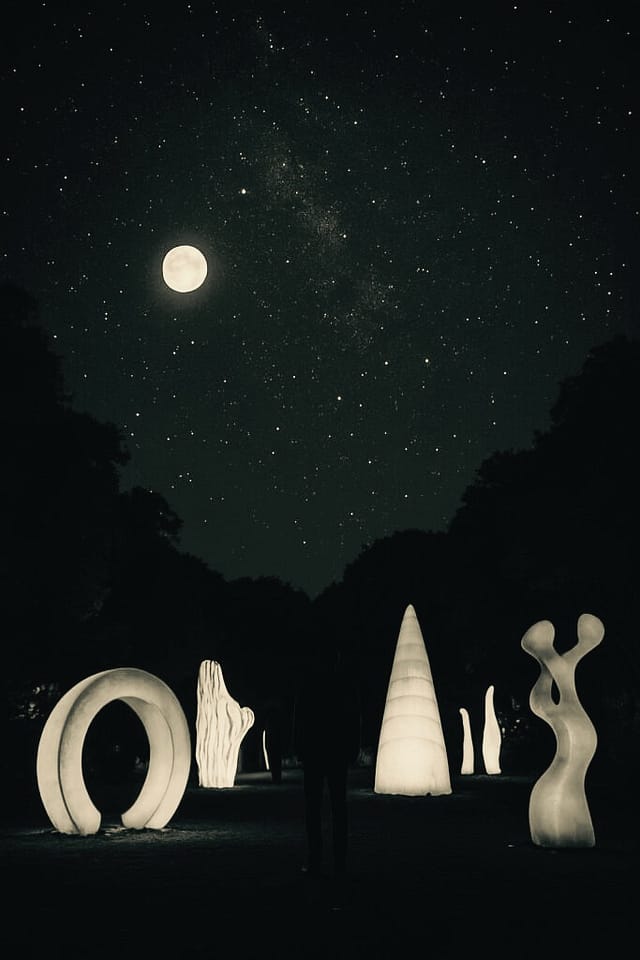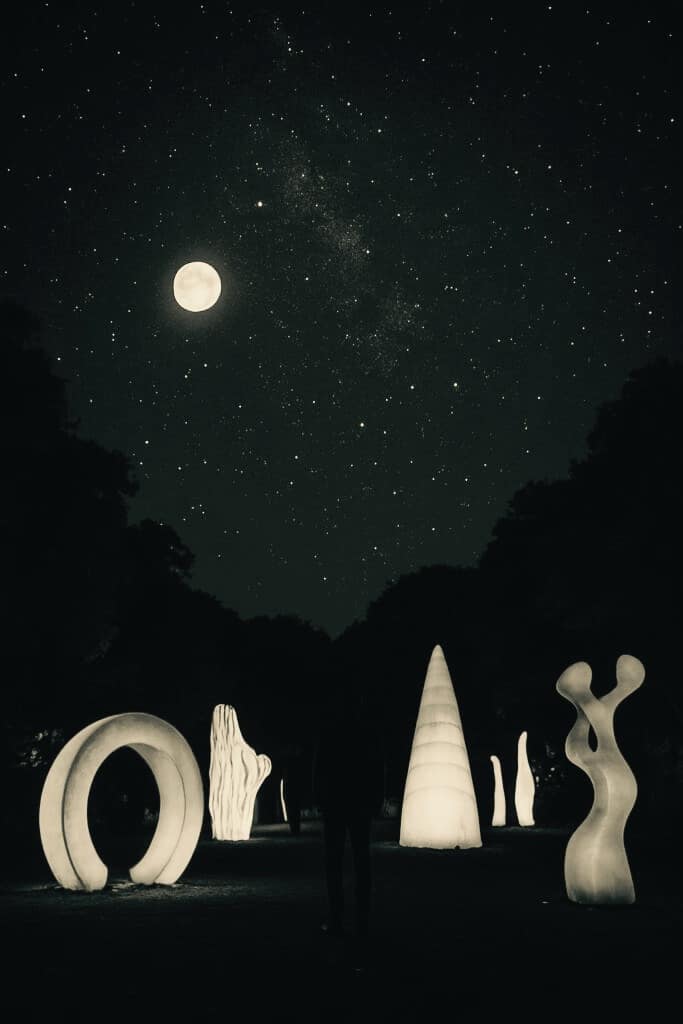
Last night, I found myself at a light installation event, surrounded by hundreds of visitors meandering through carefully crafted illuminated displays. The atmosphere was electric with wonder—people pausing to photograph glowing sculptures, children pointing excitedly at interactive displays, couples holding hands as they wandered from one illuminated marvel to the next. The artistry was undeniable, each piece meticulously designed to capture attention and spark joy.
But somewhere between the choreographed colors and the orchestrated beauty, I found my gaze drifting upward.
Above the manufactured magic, the night sky stretched endlessly, adorned with its own light show—one that has been running for billions of years without intermission, without tickets, without Instagram-worthy hashtags. The stars scattered across the darkness like ancient diamonds, the moon casting its gentle silver over the coastline. While everyone around me was captivated by the human imagination made luminous, I was transfixed by the universe’s original masterpiece.
The Paradox of Artificial Wonder
There’s nothing wrong with celebrating human creativity. These light installations represent hours of artistic vision, technical skill, and pure imagination brought to life. These installations connect us, create shared moments of beauty, and remind us that we are capable of transforming ordinary spaces into something extraordinary. Art has always been humanity’s way of adding our own brushstrokes to the canvas of existence.
Yet standing there in the gentle darkness between exhibits, I couldn’t help but reflect on what we might be missing. How often do we seek out curated experiences of wonder while overlooking the unscripted miracles that surround us every night? When did we start needing permission slips for awe—entrance fees and scheduled hours to remember how to look up?
The Democracy of Starlight
The night sky doesn’t discriminate. It doesn’t charge admission or require reservations. Every clear evening, it offers the same show that has inspired poets, guided explorers, and humbled philosophers throughout human history. The light from those stars traveled unimaginable distances and countless years to reach my eyes in that moment in Cascais—a cosmic gift that makes any earthbound light installation seem beautifully, humbly temporary.
Standing there, I realized that perhaps our hunger for these curated light experiences reflects something deeper: a yearning to reconnect with wonder itself. We create these moments because somewhere along the way, we forgot that wonder was always available to us, written in starlight across the night sky.
Finding Balance in Both Lights
I don’t mean to diminish the joy of artistic spectacle or suggest we abandon human creativity for pure naturalism. The child delighting in interactive projections, the artist inspired by innovative use of light and space, the couple sharing a magical evening—these moments matter. They connect us to each other and to our capacity for imagination.
But perhaps the most profound experiences happen when we hold both perspectives simultaneously: appreciation for human ingenuity and reverence for the cosmic stage on which we perform. The artificial lights were beautiful precisely because they existed under the vast canopy of stars, each form of illumination giving context and meaning to the other.
The Invitation Above
As I finally looked back down to rejoin the wandering crowds, I carried that moment of cosmic perspective with me. The installations seemed no less beautiful, but they felt different—like love letters written to the same sense of wonder that first made humans look up at the night sky and dream of creating light of their own.
Tonight, wherever you are, I invite you to step outside and look up. No ticket required, no crowds to navigate, no perfect photo angles to find. Just you and the same stars that have been putting on their show for millennia, waiting patiently for us to remember that the real light show—the one humanity should enjoy more—has been there all along, one clear night at a time.
The universe has been illuminated and ready for visitors since long before we learned to flip the first switch. All we have to do is remember to look up.