I used to lie on the grass as a kid and wonder something that felt almost dangerous: what if my green is your blue? What if we’ve all just agreed to call the same private experience by the same name, and no one will ever know if it matches?
It turns out that question is more honest than I realized. Because the truth is, a good deal of what we call “seeing color” isn’t really out there in the world at all. It’s something your brain is quietly constructing, moment to moment, mostly without asking your permission.
How Color Actually Happens
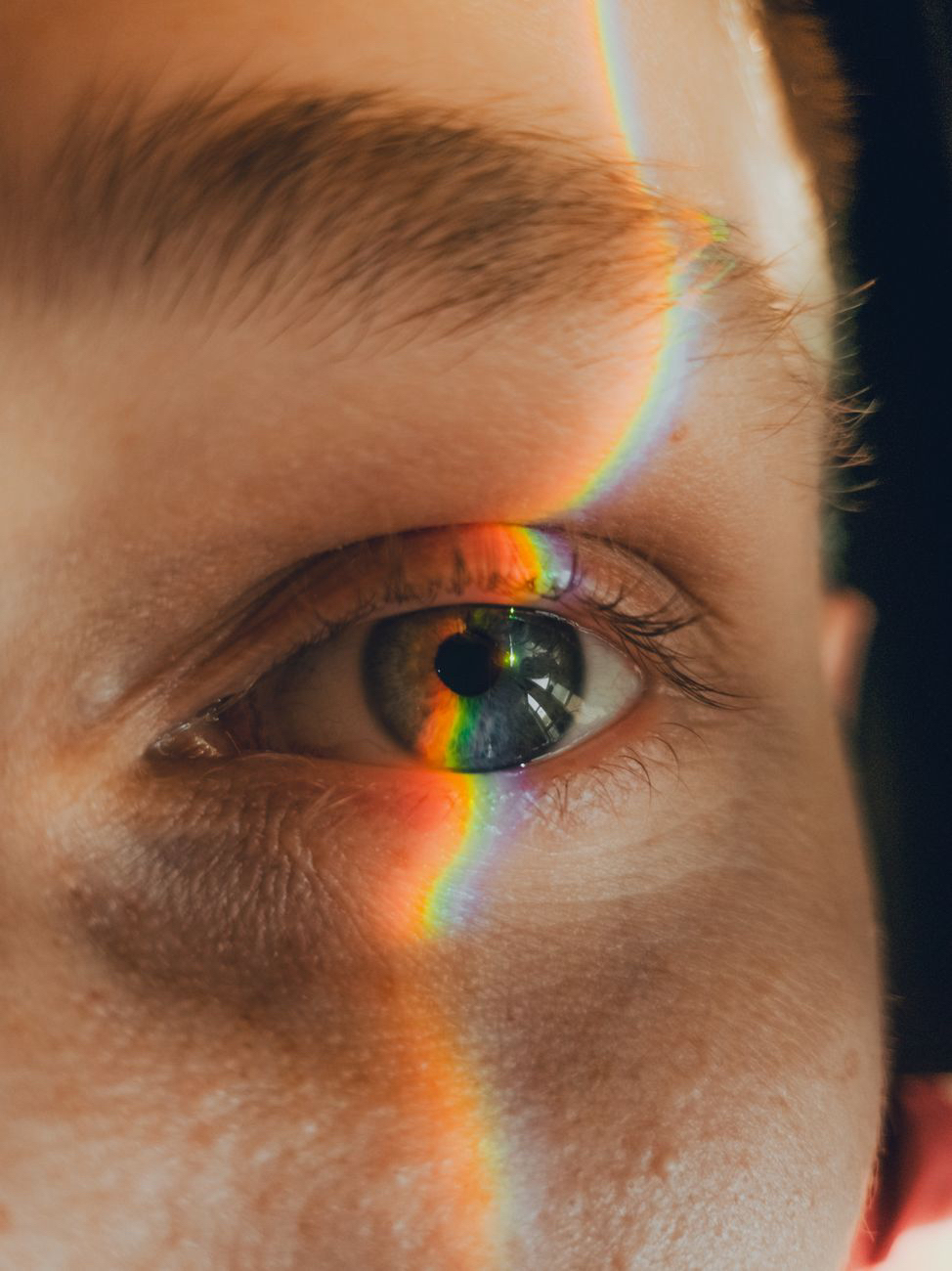
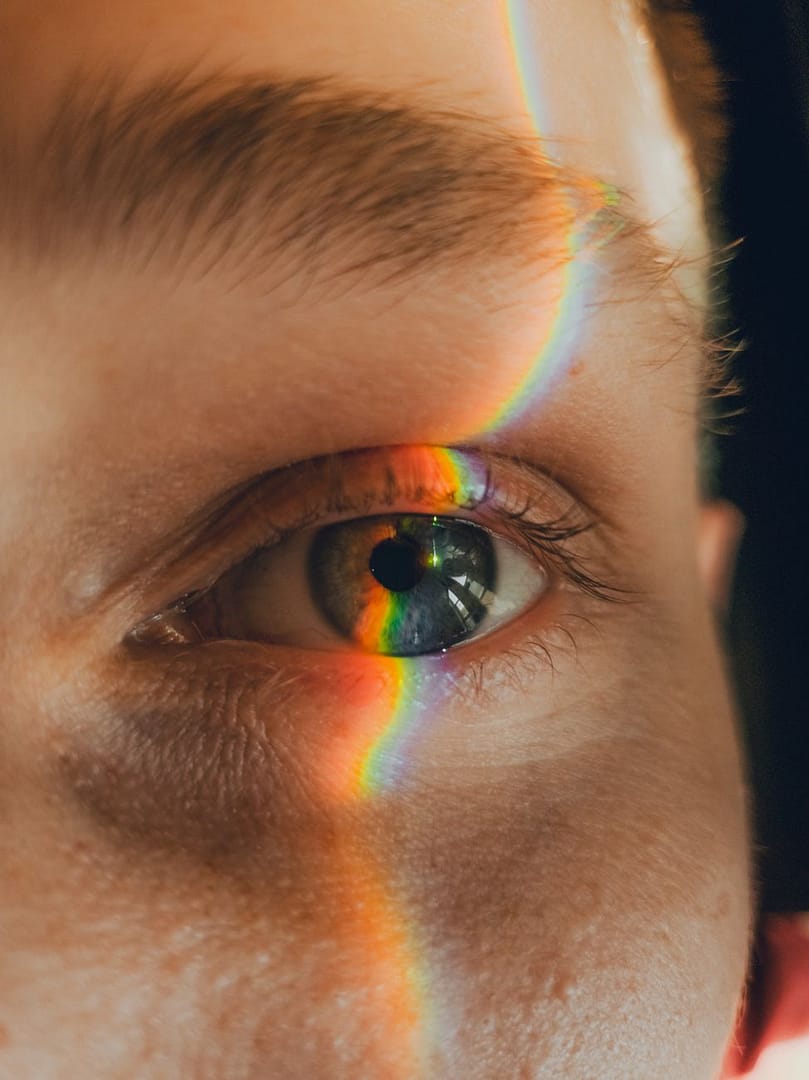
Here’s the part that surprised me. Your eyes don’t see color. Not really. What they do is catch wavelengths of light and pass along an electrical signal — a kind of rough sketch — and your brain fills in the rest.
Scientists recently mapped, at the molecular level, how the color-sensing cells in our eyes — called cones — manage to do this so quickly. Each cone contains a light-sensitive molecule, and depending on how that molecule is held in place, the cell can register red, green, or blue wavelengths and then “reset” itself for the next flash of light. Red and green cones, it turns out, reset far faster than blue ones do — almost like the eye has three different shutter speeds running at once.
It’s a small, quiet reminder of how much unseen machinery is behind something as effortless as glancing at a sunset.
Purple Was Never Really There
This is the one that still gets me. Purple, as a wavelength, doesn’t exist. Red and blue sit at opposite ends of the light spectrum, and when they hit your eyes at the same time, your brain doesn’t quite know what to do with the contradiction. So it invents something. It hands you purple as a kind of resolution — a color that exists only because your mind refused to leave the confusion unsettled.
I find something oddly comforting in that. So much of what feels solid and obvious to us is actually just our nervous system making peace with ambiguity, and doing it so smoothly we never notice the seam.
A Green That Shouldn’t Exist
In a more recent experiment, researchers used a precise laser technique to stimulate a single type of cone cell in the eye — one that, under normal conditions, never fires completely on its own because its wavelength range naturally overlaps with a neighboring cone. When they isolated it anyway, participants reported seeing a color unlike anything in their everyday experience: an impossibly saturated blue-green, sometimes described as the “greenest green” imaginable. They named it olo.
Other researchers, working differently, have even gotten people to perceive “forbidden” color combinations — a red-green or a blue-yellow existing in the same place at once, something the wiring of human vision is supposed to make impossible.
Why This Feels Like More Than Trivia
I keep coming back to this, not because I’m particularly interested in optics, but because it says something bigger. We walk around assuming we’re seeing reality directly, clearly, as it is. And most of the time, we’re not. We’re seeing a negotiation — between light and biology, between raw signal and the story our brain decides to tell about it.
Maybe that’s true of more than color. Maybe a lot of what we call “just how things are” is really just how we’ve learned, quietly and without noticing, to resolve the ambiguity.
Next time you’re outside — at the market, in a garden, watching the sky do that thing at dusk — it might be worth remembering: there’s more happening behind your eyes than you’ll ever get to see. And somewhere in that gap between light and perception, there may be colors none of us have met yet.