I used to think I had a discipline problem.
Every few months I’d do the big reset: KonMari weekend, color-coded bins, a label maker I was way too excited about. My apartment looked incredible for about eleven days. Then the papers crept back onto the counter, the sink filled up, and I was right back where I started — except now I also felt like a failure, because clearly other people could keep it together and I couldn’t.
Turns out, I was solving the wrong problem.
It’s Not About Willpower — It’s About Decision Load
Researchers have a name for what happens to your brain after a day of choices: decision fatigue. The term comes from psychologists Roy Baumeister and Kathleen Vohs, who found that making decision after decision — even small, unremarkable ones — wears down the same mental resource you need for self-control and follow-through. By the time you get to “should I deal with this pile of mail,” your tank is already empty.
Clutter makes this worse in a sneaky way. Every visible object in a messy space is a tiny unresolved decision — keep it, toss it, file it, deal with it later — competing for your attention before you’ve even started your actual task. Researchers studying cognitive load describe this as excess stimuli quietly draining working memory over the course of a day, which is part of why a cluttered room can leave you feeling tired and foggy even when you haven’t done much.
And a 2023 DePaul University study backs up something a lot of chronically messy people already suspect about themselves: clutter isn’t really a “stuff” problem. Researchers Devki Patel, Verena Graupmann, and Joseph Ferrari found that people who struggle with clutter tend to fall into distinct patterns of hesitation and indecision, and that this hesitation — not laziness — is what predicts worse outcomes. The people who struggled most weren’t undisciplined. They were stuck in decision paralysis, one object at a time.
Why the Weekend Overhaul Backfires
This is also why the marathon decluttering weekend so often fails. You’re asking a brain that’s already fatigued by dozens of tiny decisions to make hundreds of them in a row — what to keep, what to donate, where everything goes. It works for a day. Then the old patterns come back, because nothing about how you make decisions actually changed.
Behavior researchers like Stanford’s BJ Fogg have made a career out of the opposite approach: instead of a big overhaul, you shrink the task until it’s almost impossible to fail. Fogg’s “tiny habits” research is built on a simple idea — a behavior sticks when it’s small enough to do without motivation, repeated often enough that it becomes automatic. Clear one surface. Put away three things. Not because the three things matter, but because your brain is practicing finishing something without a fight.
What Actually Seems to Help
Based on the research on decision fatigue, clutter, and habit formation, a few things consistently show up as useful:
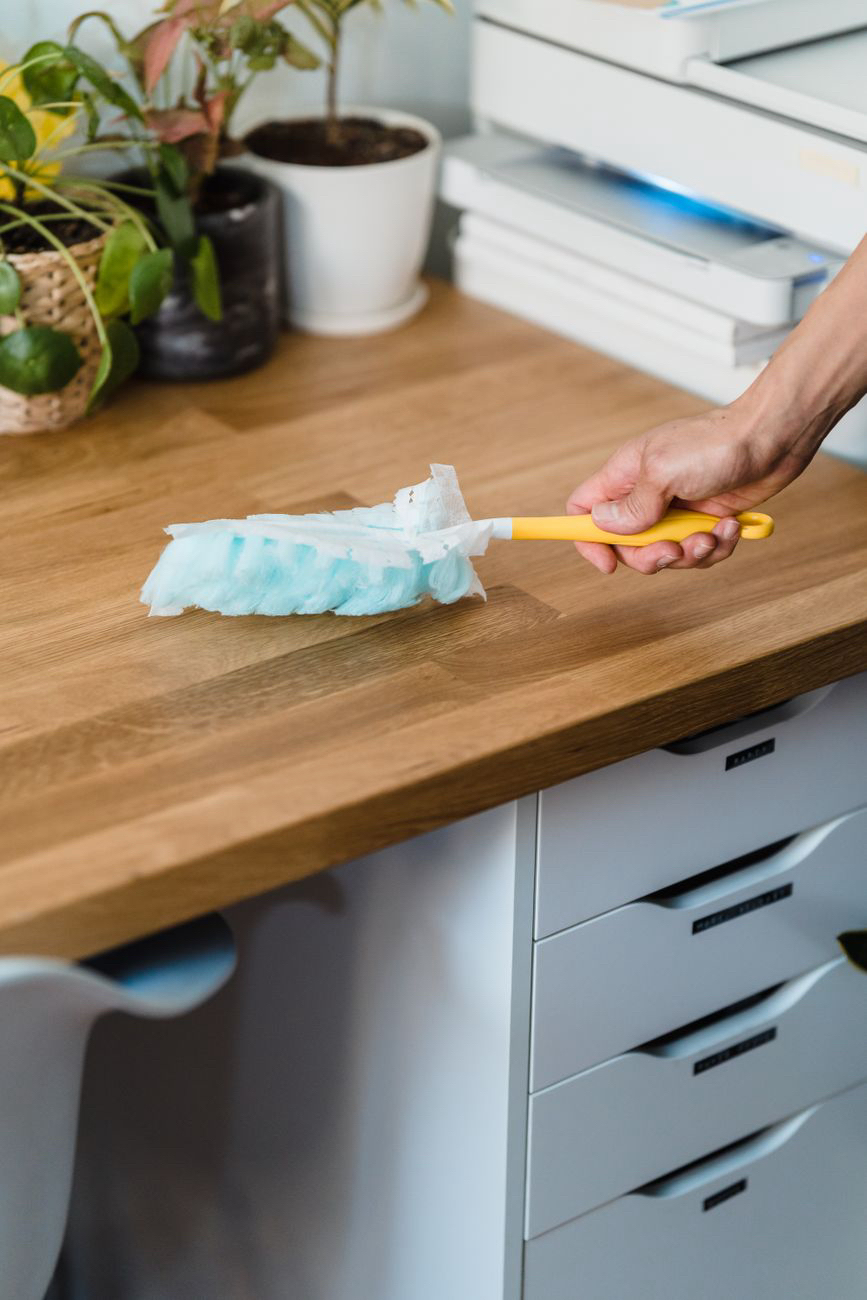
- Shrink the decision, not just the task. “Clean the kitchen” is a hundred tiny decisions. “Clear this one counter” is one.
- Do it before you’re depleted. Decision fatigue builds across the day, so small organizing tasks tend to go better earlier rather than after a long day of choices.
- Repeat small wins instead of chasing one big reset. Consistency, even in tiny doses, is what builds new automatic behavior — a weekend blitz doesn’t.
- Pre-decide where things go. Reducing the number of in-the-moment decisions (a designated mail spot, a laundry routine) removes friction before it starts.
None of this requires an app, a discovery, or a secret Japanese neuroscience lab — just a smaller ask of a brain that’s already working hard. If you’ve tried every organizing system and still end up back at square one, it might be worth trying the opposite of everything you’ve tried: something almost embarrassingly small, done consistently, instead of one heroic weekend.
If it’s still not clicking after a few consistent weeks, that’s worth mentioning to a doctor or therapist — persistent task paralysis can sometimes be tied to things like ADHD or anxiety, and that’s a different conversation than clutter.